Grading is how a competition sorts teams into even divisions before the real season starts. Teams play a set of grading games, results are reviewed, and teams move up or down until the fixtures are competitive. The VJBL runs two grading phases from about late November to March. Domestic associations typically grade over the first six rounds. It rates the team, not your child.
Last updated 11 October 2026.
Every junior competition has the same problem. Teams enter without anyone knowing how strong they are, and a fixture full of forty point blowouts is bad for everyone in it, winners included.
Grading solves that by playing some real games and watching. Results get reviewed, teams get moved, and the process repeats until the divisions are roughly even. Then the season that counts begins.
Dandenong Basketball Association's by laws describe the goal as putting each team in the grade it can actually compete in, so the competition stays balanced across the season. That is the whole idea in one sentence.
Which means the output of grading is a statement about a group of ten kids playing together, in a particular week, against particular opposition. It is not a ranking of your child.
The VJBL runs two grading phases. Basketball Victoria's 2026/27 handbook puts Grading Phase One and Phase Two from 20 November 2026 to 26 February 2027, with the championship phase running from 5 March to 17 September 2027. Those two phases decide where teams sit for the championship season.
Rosters are not frozen across both. Between the end of Phase One and the start of Phase Two, associations can move players between their own teams or bring in players who have cleared from other associations. Once a player has played in a phase, they are locked to that team for the rest of it.
That is also why offers are provisional at first. Melbourne Tigers tell families that for U12 to U18, selections are not permanent until after the first round of grading in mid December, to allow for long term injuries.
From 2026 the ladder your team is grading into changed shape. The VJBL now runs three tiers: Victorian Championship at the top, then Victorian Junior League divisions, then the new Regional League as a third tier, organised into geographic pools to cut travel. Under 12 teams grade into VC, VJL1 to 5 or Regional League. Under 14 teams grade into VC, VJL1 to 8 or Regional League. Unlike the Regional Development League pilot it replaced, the Regional League has its own grading phase.
Domestic grading is run by your association, so the detail varies, but the pattern is consistent. EDJBA's committee of management decides how many grading rounds a season gets before it starts, and teams are adjusted after every one of them based on results. Some go up a grade, some go down, and plenty stay where they are.
The points get retro fitted afterwards, which surprises people. EDJBA calculates adjusted premiership points based on the final grade each team lands in. If two teams that met during grading finish in the same grade or one grade apart, the result stands normally. If they finish more than one grade apart, the points are reallocated. Percentages are only calculated from the first round after grading is complete.
Dandenong take a similar approach with different labels. Grades run Premier League, A, B, C, D and so on. Regrading up or down can occur in the first six weeks, with most of it hoped to be done by week four. A team regraded during the season has its ladder percentage reset to zero.
Some associations also grade on who is in the team, not just results. Dandenong's by laws state a domestic team with three or more Victorian Championship players, current or from the past two seasons, must be entered in the highest grade available in its age group, and a team with two VC players can go in the highest or second highest grade.
First, losing during grading is the system working. A team that gets beaten in grading gets moved somewhere it can compete. Parents who push for a higher grade because the losses sting are usually asking for a season of losses.
Second, winning a grading game does not guarantee a move up. EDJBA's process weighs the relative strength of everyone, so a team can win and still stay, if the team they beat lost more heavily elsewhere.
Third, the ladder does not mean anything yet. Under EDJBA's rules percentages start counting from the first round after grading finishes. A team sitting last during grading has not lost anything.
Fourth, a division number is not a talent score for your child. A strong player on a rebuilding team grades low. An average player on a stacked team grades high. If you want to know how your child is going, watch their minutes and their touches, not the fixture.
Regrading requests are a real process at most associations, but a formal one. Dandenong require requests in writing from a club president or administrator, or a team representative for a single team, submitted to the domestic competitions administrator by the end of the third week of the grading period, and they state plainly that not all requests are approved.
That means the person to speak to is your club, not the referee, not the opposition coach, and not the association's Facebook page. Go through the club and go early.
What you cannot do is have your child regraded individually. Grading moves teams. If the concern is that your child is in the wrong team rather than the wrong grade, that is a conversation with your club about team placement for the next season, and it will land better in March than in the week after a heavy loss.
One thing worth knowing before you argue too hard: associations can also move a team without being asked. Dandenong's by laws allow the competitions administrator, with the grading coordinator, to regrade or relocate a team deemed significantly stronger than its competition.
It depends on the competition. EDJBA decides the number of grading rounds before each season begins. Dandenong allows regrading in the first six weeks, with most of it hoped to be complete by week four. The VJBL runs two grading phases from roughly late November to March.
Partly, and not the way you would expect. EDJBA reallocates adjusted premiership points based on the final grade each team lands in, and only calculates percentages from the first round after grading. Check your own competition's rules, because associations handle this differently.
Usually not once they have played. Dandenong's by laws state a player cannot switch clubs after playing a game once the season has started, including during grading. In the VJBL, playing a game in a grading phase locks a player to that team until the phase ends.
Because grading compares everyone at once. Under EDJBA's process a team can win and still hold its position if the teams it beat were themselves graded lower. It is a placement exercise, not a reward for the last result.
The association. At Dandenong it is the grading coordinator under the direction of the domestic competitions manager, and team movement is at their discretion. In the VJBL the grading phases decide placement for the championship season.
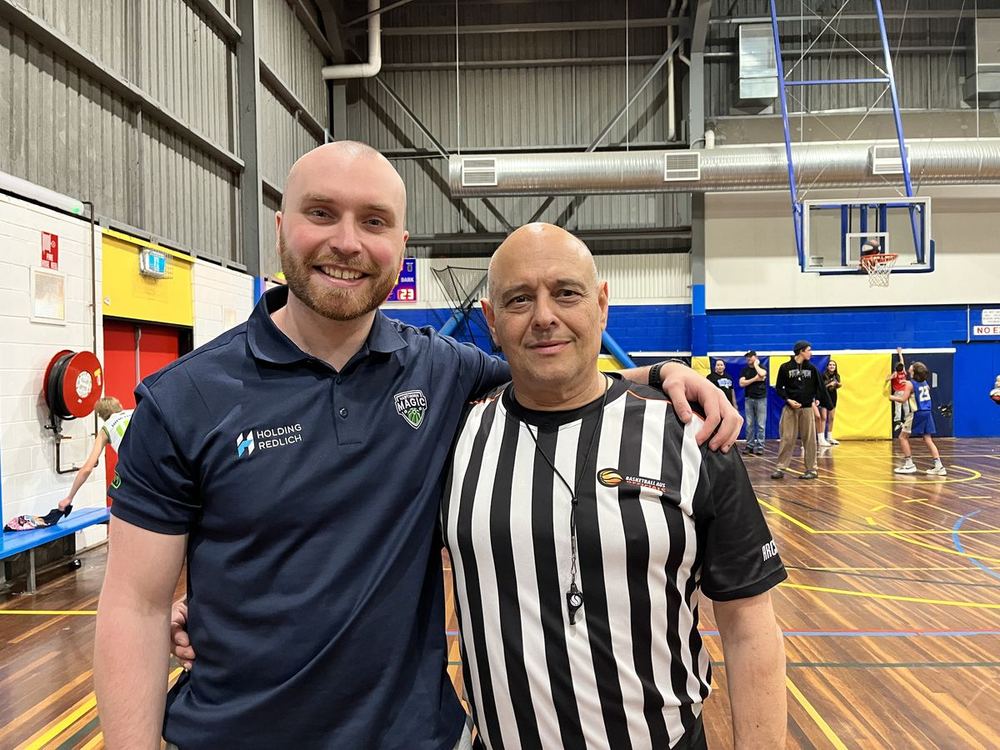
If you have a question that you want answered and it isn't here - talk to head coach Cameron and he can talk you through the question that you have.
More on tryouts and season
Next questions parents ask
Every competition in this guide
Facts on this page were compiled from the official sources below and written up in our own words. Dates, fees and venues change every season, so confirm anything you are relying on with the association directly.
This page was last updated October 2026. Spotted something wrong? Tell us.