Basketball Victoria classifies players as Victoria Metropolitan or Victoria Country using the postcode of the participant's primary residential address. It is your home address that decides it, not the association your child plays for. The classification affects which representative pathways and competitions a player is eligible for. Basketball Victoria publishes an official postcode checker, and that tool is the authority.
Last updated 24 August 2026.
Basketball Victoria sorts participants into Victoria Country or Victoria Metropolitan on postcode, and the postcode it uses is the one for the person's primary residential address.
That single sentence resolves most of the arguments parents have about this. It does not matter which association your child plays for, which stadium they train at, or where their friends live. It is where they actually live.
Pakenham and District Basketball Association say the same thing about their own patch, and it is worth repeating because it is counterintuitive: just because a player plays under the association does not mean they qualify for country status, even though the association itself does.
So a child playing for a country association can be classified metro, and a child playing for a metro association can be classified country. Both happen every year.
Because it is drawn on postcodes rather than on regions, the boundary falls in places that feel arbitrary on the ground.
Southern Peninsula Basketball Association publish the clearest example we found. Players who live on the north side of Bentons Road, which is Mornington, are eligible only for metro selections. Players on the south side, which is Mount Martha, are eligible only for country selections. Same association, same stadium, two different pathways, decided by which side of a road the family lives on.
That is not a quirk of one association. It is what any postcode boundary does when it crosses a built up area, and it is exactly why guessing is a bad idea.
It also means the classification can change without your child doing anything, if you move house. If you relocate, re run the check rather than assuming last season's answer still holds.
The clearest difference is at the representative and high performance end. Basketball Victoria runs separate calendars for the two, publishing a metro performance pathways calendar and a country performance pathways calendar for 2026, and it maintains thirteen high performance teams that attend the Australian Junior Championships each year.
On the country side, Basketball Victoria runs Junior Country Championships for Under 12, Under 14, Under 16 and Under 18, open to regional affiliated associations and country Victorian athletes, held over multiple days in round robin and knockout format. Pakenham describe the broader country pathway as including skills days, jamborees, regional academy programs and the Southern Cross Basketball Challenge at the younger ages, and open tryouts at Under 16 and Under 18 for squads that compete at the Australian Country Junior Basketball Cup in January.
Basketball Victoria also runs a Country Metro Challenge, part of its performance pathways, which puts the two groups on the same floor rather than treating them as separate ladders. The 2026 edition was held at Red Energy Stadium in Bendigo across two days in June, bringing together 72 country and 122 metro athletes.
The distinction does not run forever. Pakenham note that at Under 20 state representation moves to a single Victoria model rather than maintaining separate country and metro teams.
We are deliberately not publishing a postcode list on this page. Postcode boundaries get adjusted, and a stale list on a third party website is exactly the sort of thing that sends a family to the wrong trial on the wrong weekend.
Basketball Victoria runs an official Country and Metro postcode checker for exactly this, and describes it as the way to work out which of the two you qualify as. Put in the postcode of your child's primary residential address and it returns the classification.
Basketball Victoria also states that the check shows the leagues and competitions a participant is eligible to play in, so it is worth running even if you are not chasing a state pathway. Do not assume the answer only matters for representative trials.
If the result surprises you, or your address sits close to a boundary like the Bentons Road example, contact your association or Basketball Victoria rather than arguing with the tool. Associations deal with borderline cases every season.
It does not decide whether your child plays domestic or rep. That is a separate question about tryouts and selection at your own association.
It is also not the same thing as the VJBL's Regional League. The Regional League is a competition tier introduced for 2026 that groups teams into geographic pools to reduce travel. The metro and country classification is about individual eligibility for state pathways. A team in the Regional League is not automatically a team of country classified players.
And it does not describe your child's ability. Country programs are pathways with their own championships, academies and national tournament, not a lower tier. The Country Metro Challenge exists precisely because the two groups are worth putting on the same floor.
The practical takeaway is small and specific. Run the checker once, write the answer down, and re run it if you move.
By the postcode of the participant's primary residential address. Basketball Victoria uses a postcode based approach to determine eligibility to represent Victoria Country or Victoria Metropolitan and to show what leagues and competitions a participant can play in.
Not necessarily. Pakenham state plainly that playing under their association does not mean a player qualifies for country status even though the association itself does. It comes down to where the family lives, so run the official checker.
Basketball Victoria publishes a Country and Metro postcode checker on its high performance section, described as a tool to help determine whether you qualify as a metro or country athlete. Use it rather than any postcode list you find on a third party site.
Basketball Victoria runs Junior Country Championships for Under 12, Under 14, Under 16 and Under 18, open to regional affiliated associations and country Victorian athletes. Pakenham describe skills days, jamborees and regional academies at younger ages and open tryouts at Under 16 and Under 18.
Not at every level. Pakenham note that at Under 20 state representation moves to a single Victoria model rather than maintaining separate country and metro teams.
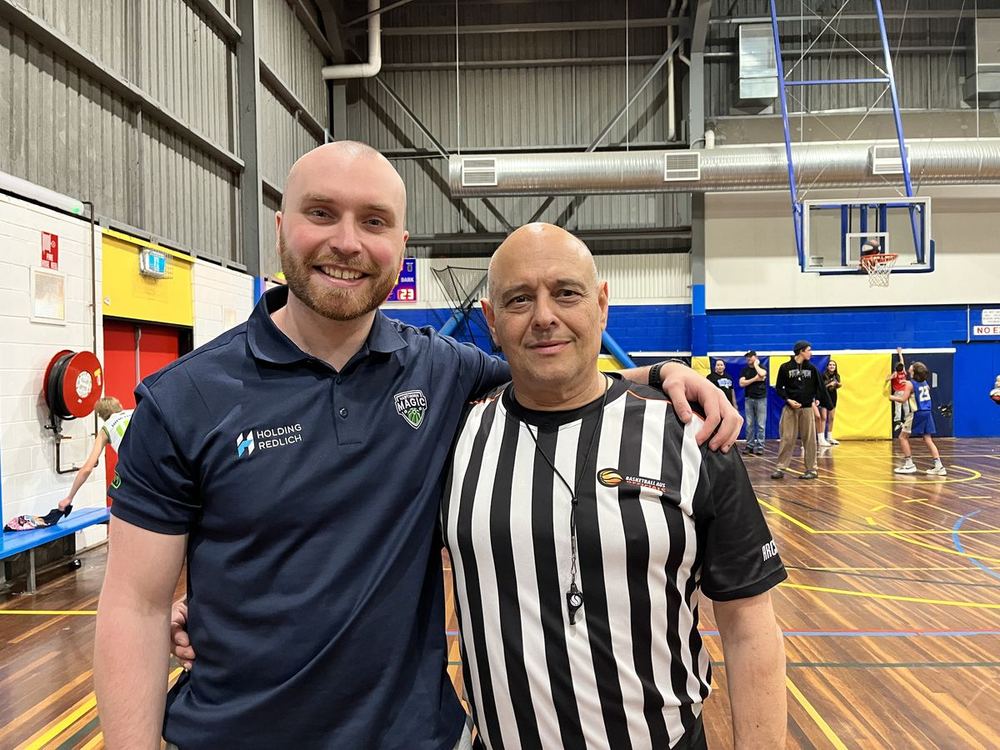
If you have a question that you want answered and it isn't here - talk to head coach Cameron and he can talk you through the question that you have.
More on costs and choosing
Next questions parents ask
Every competition in this guide
Facts on this page were compiled from the official sources below and written up in our own words. Dates, fees and venues change every season, so confirm anything you are relying on with the association directly.
This page was last updated August 2026. Spotted something wrong? Tell us.