NSW rep age groups go by age on 31 December: a player must be under the age of their group at the end of the year, and U12 players must be at least nine. For 2027, six of the eight Sydney associations we checked list U12 as born 2016 to 2018, U14 as 2014 and 2015, U16 as 2012 and 2013, and U18 as 2010 and 2011. Local competitions set their own bands.
Last updated 9 October 2026.
For rep basketball, rule 30.2 of Basketball NSW's 2027 Waratah Junior League Rules of Operation sets the test: a player must be under the age of their nominated age group on 31 December of the year in question. So an Under 14 player in 2027 must still be 13 or younger on 31 December 2027.
The rep age groups are U12, U14, U16 and U18, so each one normally covers two birth years. U12 has an extra rule: players must be at least nine years old as at 31 December of the year they play.
Basketball NSW's membership fees use the same 31 December idea. Its J 8 to 11 fee category is for junior players aged 8 to 11 who have reached or will reach that age by 31 December that year.
Associations publish the birth years for each age group on their 2027 trial pages. The table shows what eight Sydney associations had published when we checked on 9 October 2026, linked to each association's own page.
Six of the eight agree exactly. Norths, Hills, Bankstown, Penrith, Inner West Bulls and Camden Valley Wildfire all list U12 as born 2016, 2017 or 2018, U14 as born 2014 or 2015, U16 as born 2012 or 2013, and U18 as born 2010 or 2011. Parramatta-Cumberland lists its U12 trial as born 2016 and 2017, and Manly Warringah lists U12 as 2016 and later.
If your child's birth year is not on your association's list, ask the association before trial registrations close rather than registering for the wrong group.
| Association | U12 | U14 | U16 | U18 |
|---|---|---|---|---|
| Northern Suburbs (Norths) | 2016, 2017, 2018 | 2014, 2015 | 2012, 2013 | 2010, 2011 |
| Hills Hornets | 2016, 2017, 2018 | 2014, 2015 | 2012, 2013 | 2010, 2011 |
| Bankstown Bruins | 2016, 2017, 2018 | 2014, 2015 | 2012, 2013 | 2010, 2011 |
| Penrith | 2016, 2017, 2018 | 2014, 2015 | 2012, 2013 | 2010, 2011 |
| Inner West Bulls | 2016, 2017, 2018 | 2014, 2015 | 2012, 2013 | 2010, 2011 |
| Camden Valley Wildfire | 2016, 2017, 2018 | 2014, 2015 | 2012, 2013 | 2010, 2011 |
| Parramatta-Cumberland | 2016, 2017 | 2014, 2015 | 2012, 2013 | 2010, 2011 |
| Manly Warringah | 2016 and later | 2014, 2015 | 2012, 2013 | 2010, 2011 |
U12 is the one rep age group that can stretch to three birth years, because of how the two rules work together. A child born in 2018 turns nine in 2027, so they meet the minimum age of nine at 31 December 2027 and are under 12. A child born in 2016 turns 11 and is also under 12.
Associations still decide who trials where. Hills lists its U12 trials for players born 2016, 2017 and 2018, and says any 2018 born player not selected there can attend its Rep Rookie trial on Sunday 1 November 2026, for its development squad. Parramatta-Cumberland's 2027 U12 trials list only players born 2016 and 2017.
Under the same rule, a child born in 2018 stays U12 age through 2027, 2028 and 2029, turning 9, 10 and 11 in those years, so being one of the youngest in a U12 squad is built into the system.
You will hear coaches talk about top age and bottom age. Basketball NSW's nomination guide says top age players belong to the older of the two eligible birth year groups, in the last year they can play in that bracket, while bottom age players are in the younger group and come back to the same division the next year as top age players.
Under the 2027 rules a player can play up a maximum of two age groups, and moving up more than one age group needs written permission from a parent or guardian. A player in a higher age group team can play three games with it, and on the fourth becomes a permanent member of that team for the rest of the season, including finals.
Trialling up is a separate question, and associations decide it. Norths, for example, answers the question of whether a child can trial for the age group above with: unfortunately they cannot.
Domestic age groups are not set by the Waratah rules, and Sydney associations draw them differently. Some match the rep bands and some do not. Several summer competitions run across two calendar years, and associations pick different years to count from.
City of Sydney's season 2026-3 counts from 2026: its U12 players cannot be turning 12 in 2026. City of Blacktown's 2026/27 Summer League counts from 2027, with age as of 31 December 2027, and gives the example that a child born on 15 May 2016 can play Under 12s and above.
Bands differ in width too. Hills' Summer 26/27 season uses one year bands, U9, U10, U11, U12, U13 and up, with U12 for players born 2016 or later and U13 for players born 2015 or later. Sutherland's competition page lists its 2026 programs in overlapping two year bands, with U11 born 2017 or 2018, U12 born 2016 or 2017 and U13 born 2015 or 2016, and says its ages go by birth year rather than the age a child reaches during the competition. Marrickville Spirit's Term 4 2026 Saturday competition lists U10 as born 2017 to 2019 and U12 as born 2015 to 2016.
Others use different names altogether. Norths' 2026 Autumn junior competition included U14, U16 and U19 groups, with U19 players born no earlier than 2008. Newcastle's 2026/27 junior summer competition uses U11, U13, U15 and U17, with U13 for players born in 2014 and 2015.
Put those together and the same child can carry several labels at once. Take a child born in 2015. In Marrickville Spirit's Term 4 2026 Saturday competition they are an U12. In Hills' Summer 26/27 competition they are U13 or older. In City of Blacktown's Summer League they are Under 14 and above. For 2027 rep, every association in our table puts them in U14.
None of that is a mistake. It is the result of different associations choosing different cut off years for different competitions. The practical rule is to check the birth years printed by the competition you are entering, and never assume the label carries over.
Basketball NSW's own programs add more labels. Its 2026 Under-12 Skills Days were for players born in 2015 or 2016, its U13 Skills Days are for players born in 2014 and 2015, and its Talented Athlete Program takes U13 players born in 2014 and U14 players born in 2013. Those program names do not match the Waratah age groups, so read the birth years, not the label. Ball size is listed by age group too: Basketball NSW asks U12 players at its U13 Skills Days to bring a size 5 ball, and U14 players a size 6.
Six of the eight Sydney associations we checked list U12 as born 2016 to 2018, U14 as 2014 or 2015, U16 as 2012 or 2013, and U18 as 2010 or 2011. Parramatta-Cumberland and Manly Warringah list U12 slightly differently. Check your own association's trial page.
Associations publish their own trial groups. Parramatta-Cumberland lists U12 trials for players born 2016 and 2017. The Waratah rule allows U12 players who are at least nine at 31 December, so ask your association where a younger child should trial.
The 2027 rules allow a player to play up a maximum of two age groups, with written parent permission to move up more than one. Some associations, such as Norths, do not let players trial for the age group above.
Each association sets its own domestic age bands and cut off year. For example, City of Sydney's season 2026-3 counts from 2026, while City of Blacktown's 2026/27 Summer League counts from 31 December 2027.
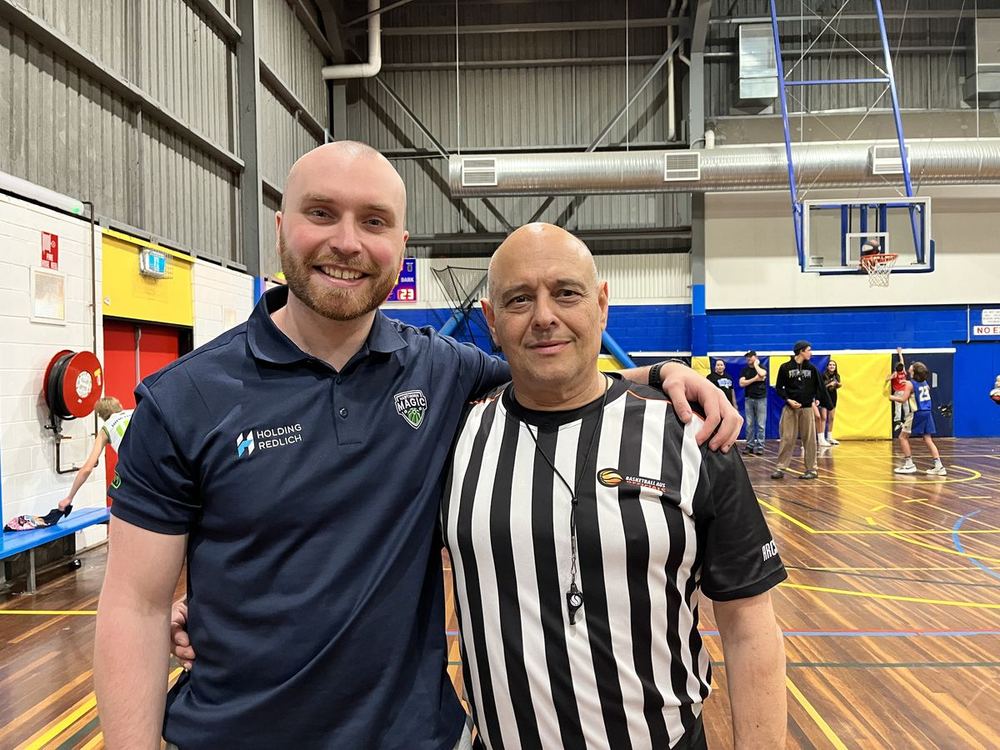
If you have a question that you want answered and it isn't here - talk to head coach Cameron and he can talk you through the question that you have.
More on start here
Next questions parents ask
Facts on this page were compiled from the official sources below and written up in our own words. Dates, fees and venues change every season, so confirm anything you are relying on with the association directly.
This page was last updated October 2026. Spotted something wrong? Tell us.